YouTube does not publish an exact formula for a view, and it is deliberately vague so the system is harder to game. What it does say, and what creators can observe, is enough to answer most questions.
What counts as a view
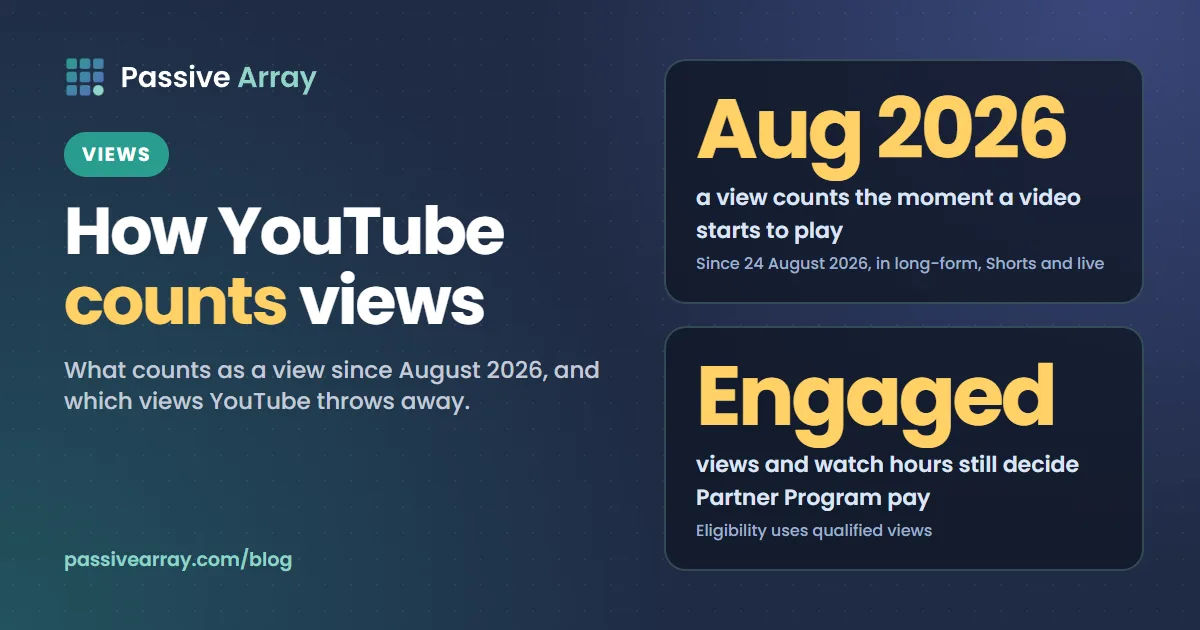
Since 24 August 2026, YouTube counts a view the moment a video starts to play, across all formats: long-form, Shorts and live. Before that date, long-form views needed some watching before they counted. The key word in YouTube's description is still intentionally. Views are meant to measure real people choosing to watch, so YouTube filters out playback it judges to be automated, forced or repeated in a way no real viewer would.
So there is no minimum watch time for a public view any more. The often-repeated "30 seconds" rule came from how certain ad views were once counted, and it was never the rule for ordinary views.
Views YouTube removes
- Bots and scripts. Traffic from automated programs is discarded, sometimes days later.
- Refresh loops. One person reloading a video over and over does not add a view each time. Some replays count; endless ones do not.
- Bought views. Views from services that sell them are a common source of the drops creators see when YouTube's checks catch up, and buying them breaks YouTube's policies.
- Forced playback. Views generated by tricking people into starting a video, or by pages that play videos without the viewer choosing to, can be filtered.
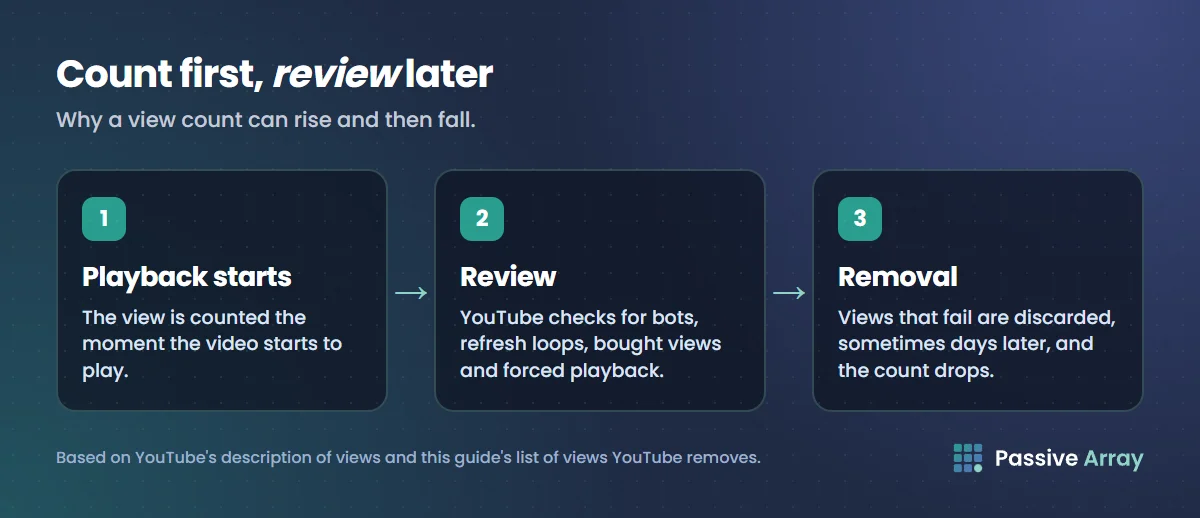
This is why view counts sometimes fall. YouTube counts first, then reviews, and removes what fails the review.
Do your own views count?
Yes, if you watch it like any viewer would. Watching your own video once from your account can add a view. Replaying it repeatedly to inflate the number will be filtered, and watching it inside YouTube Studio's preview is not a view.
Views versus engaged views
Shorts moved to counting a view on every start or replay in March 2025, and YouTube extended the same start-to-play rule to every format on 24 August 2026. That makes public view counts higher and easier to earn than they used to be.
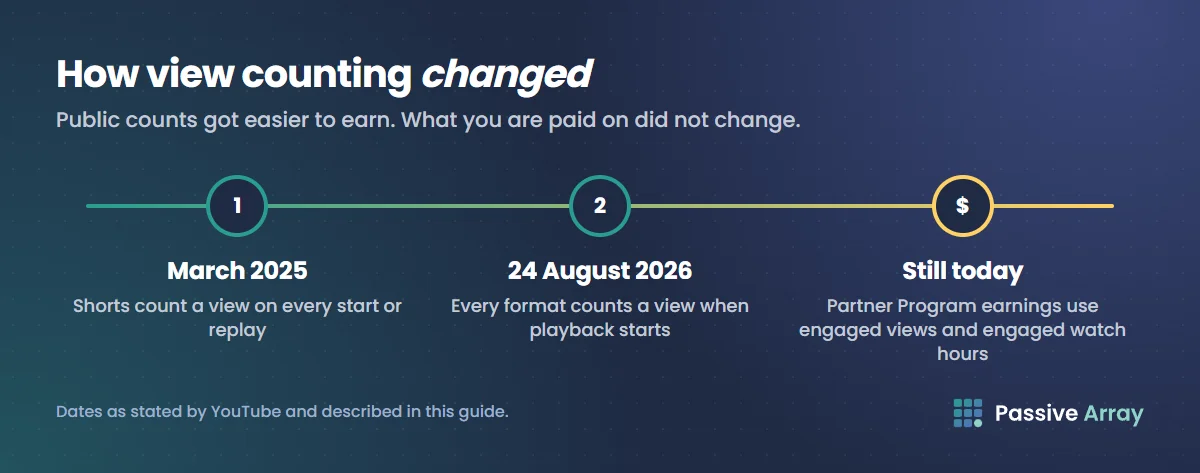
YouTube kept a stricter measure for money. Partner Program earnings are still based on engaged views and engaged watch hours, and eligibility on qualified views, so the change did not alter what anyone is paid. In YouTube Studio you can see both. If you are tracking progress toward monetization requirements, engaged views are the number that matters.
Why the count looks stuck or lags
- Live counts update in batches. A new video can appear to stall for a while and then jump.
- Studio and the public page can disagree. YouTube Studio reports with a delay; the public count updates on its own schedule.
- Spam review. A sudden spike from one source can be held while YouTube checks it.
None of these means anything is wrong. Check again in a day before worrying.
Views on embeds and in ads
Views on embedded players on other websites count, as long as the viewer starts the video. YouTube also counts some views from video ads, depending on the ad format and how long the viewer watches, which is how promoted videos gain views.
What the view count does not tell you
A view is the start of a watch, not a measure of whether anyone liked it. Two videos with the same views can have very different engagement and watch time. Run any video or channel through the engagement rate calculator to see how many viewers reacted, and the channel quality checker for whether a channel's views look like a real audience. If you want to know what the views are worth, the money calculator turns them into an earnings range.
By Nasir Uddin, founder of Passive Array. Rules and figures checked Oct 29, 2026.